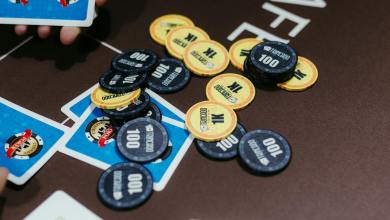
Elite Showdown at the 2026 Mixed Games Final Table

2026 Super High Roller Mixed Games Final Table Details
The Super High Roller Bowl has played down to its Mixed Games final table, providing a stage for elite poker players to contend for a $1.3M first prize. The event has drawn attention as the year’s biggest mixed games buy-in competition.
Mixed Games Final Table Overview
The 2026 Super High Roller Bowl has brought together an impressive roster of professional players. The focus now shifts to the Mixed Games final table, where the remaining competitors will battle for a substantial prize. In recent years, high-stakes mixed games events have gained popularity for their diverse format, testing players’ skills across various poker disciplines.
Competition Format
This high-stakes tournament is a $100K mixed games event that challenges participants with a range of poker variants. The structure requires adaptability and deep understanding of several game types, making every decision critical. The final table consists of players who have successfully navigated multiple rounds featuring different variants, which may include popular formats like No-Limit Hold’em, Pot-Limit Omaha, and other less common games. This diverse lineup emphasizes that modern poker events often reward strategic versatility and comprehensive game knowledge.
Notable Exclusions
Notably, prominent figures such as Daniel Negreanu and Phil Hellmuth did not reach the final table, underscoring the competitive nature of the tournament. Their absence highlights the unpredictable element inherent in mixed games, where even seasoned professionals can fall short. The exclusion of such well-known players serves to remind spectators that the tournament outcomes are not predetermined by reputation alone.
Prize Distribution and Stakes
At stake is more than just prestige. The contested $1.3M first prize represents a significant reward for the final table competitors, reflecting the high buy-in and intense competition. The event’s large prize pool also reinforces why many professionals see mixed games events as a valuable opportunity to challenge their skills and secure lucrative returns. With every hand played at the final table, competitors are aware that a single winning strategy could lead to a substantial increase in their earnings.
Event Impact and Future Considerations
In recent years, mixed games events have influenced poker strategies and tournament structures. The 2026 Super High Roller Bowl is contributing to a long-term trend where players continuously adapt to varied game formats. The success of mixed games tournaments demonstrates a move toward embracing a holistic approach to poker, wherein no single variant holds a monopoly on skill dominance.
The implications extend to other poker events worldwide. Elo ratings and game analytics have shown that mixed games test a player’s overall poker acumen more rigorously compared to single-format tournaments. Consequently, the outcome of this final table is seen as a benchmark for assessing how well top competitors adjust under pressure in unfamiliar conditions.
Furthermore, the event’s design encourages a shift in training regimens for professional players. By allocating a portion of their practice time to less familiar variants, players aim to enhance their adaptability across different styles. Such adjustments may eventually influence the broader competitive landscape and tournament offerings in the coming years.
Spectators and analysts alike are expected to examine the gameplay closely, studying strategic adjustments made at the final table. The emphasis on mixed games means that understanding the nuances of each format becomes critical. With the shifting dynamics of professional poker, the evolution of tournament structures and prize allocations is likely to continue, setting the stage for future events that prioritize versatility and strategic depth.
Observing the final table action offers valuable insights into high-level poker decision-making. The concentrated battle on the Mixed Games final table provides a case study in risk management, game selection, and adaptive thinking. Analysts predict that the strategic learning derived from this tournament will have a ripple effect, influencing training approaches across both live and online tables.
Moreover, the tournament organizers have emphasized that every element of the event—from the buy-in to the prize distribution—is designed to elevate the standard for high-stakes mixed games. The focus remains on ensuring competitive integrity and fostering an environment where skilled players can fully exercise their strategic prowess. As a result, the Super High Roller Bowl continues to set benchmarks in the realm of mixed games poker events, paving the way for future innovations in contest design and player evaluation.
FAQ
What is the format of the Mixed Games final table?
The Mixed Games final table features a rotation of poker variants requiring players to adapt to different rules and strategies throughout the tournament.
How does the buy-in impact the final table competition?
The $100K buy-in sets high stakes for the event, ensuring that only seasoned professionals with deep expertise in multiple game formats reach the final table.
Why are mixed games events gaining popularity in poker?
Mixed games tournaments test overall poker skills across various formats, which provides a more comprehensive challenge than single game events and appeals to a broad range of professionals.
What was the prize for the final table competitors?
The winner of the final table battles for a first prize of $1.3M, reflecting the high level of competition and skill required in such an elite event.
Who are some notable players that did not make the final table?
Prominent poker figures such as Daniel Negreanu and Phil Hellmuth were unable to advance to the final table, highlighting the unpredictable nature of mixed games events.